The Immigrant Table · NUI

Seoul · Korea → Canada
Warmth, family, and Korean comfort food shaped by memory.
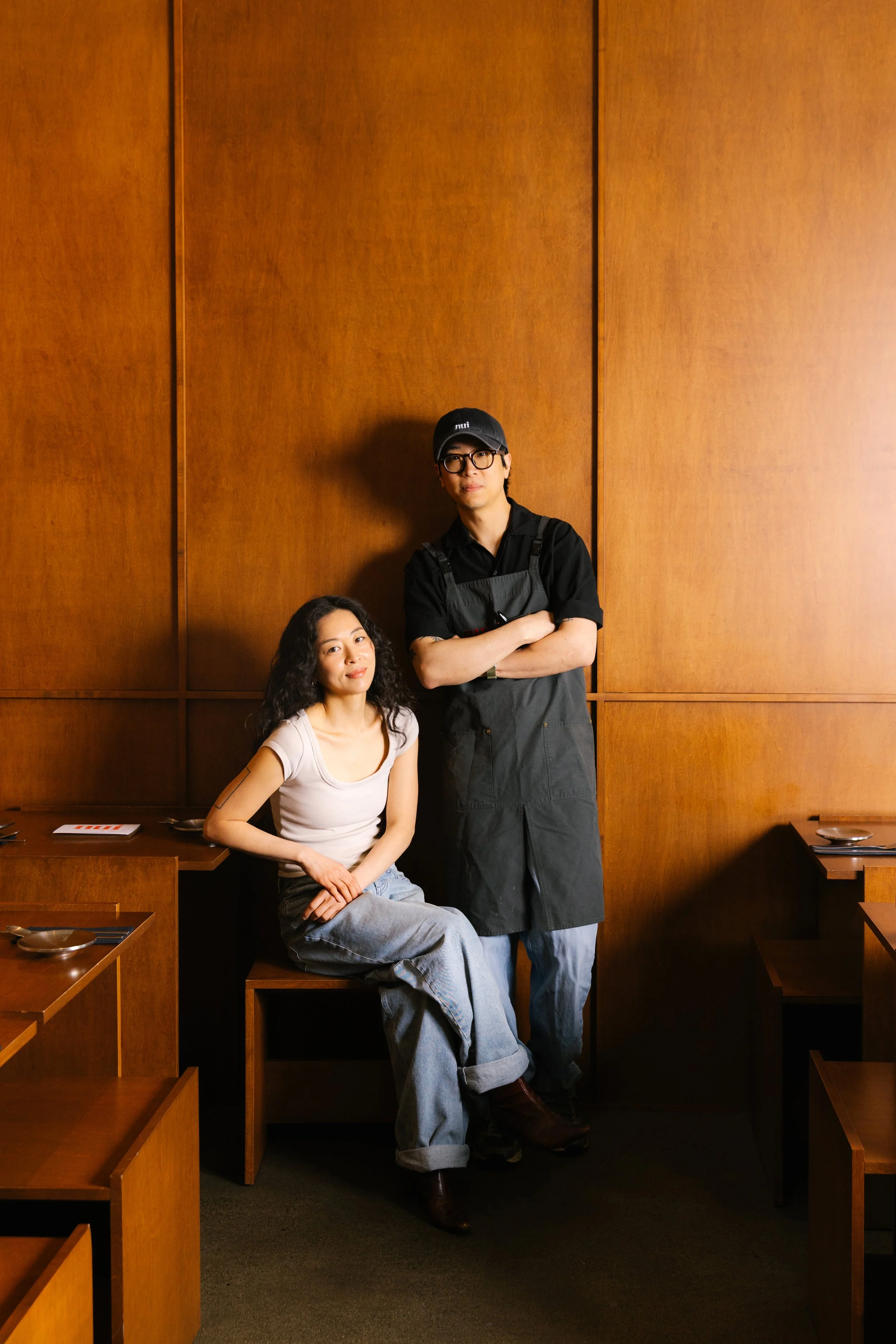
At NUI in Mount Pleasant, warmth is built into everything — the food, the space, the service, even the name itself. “Nui” means older sister in Korean, but in a softer, more caring way — someone who looks after you like family. When chef Jay moved to Canada as a child, it was his older sister who helped their family navigate a new country and language. That feeling of care eventually became the foundation of the restaurant itself.
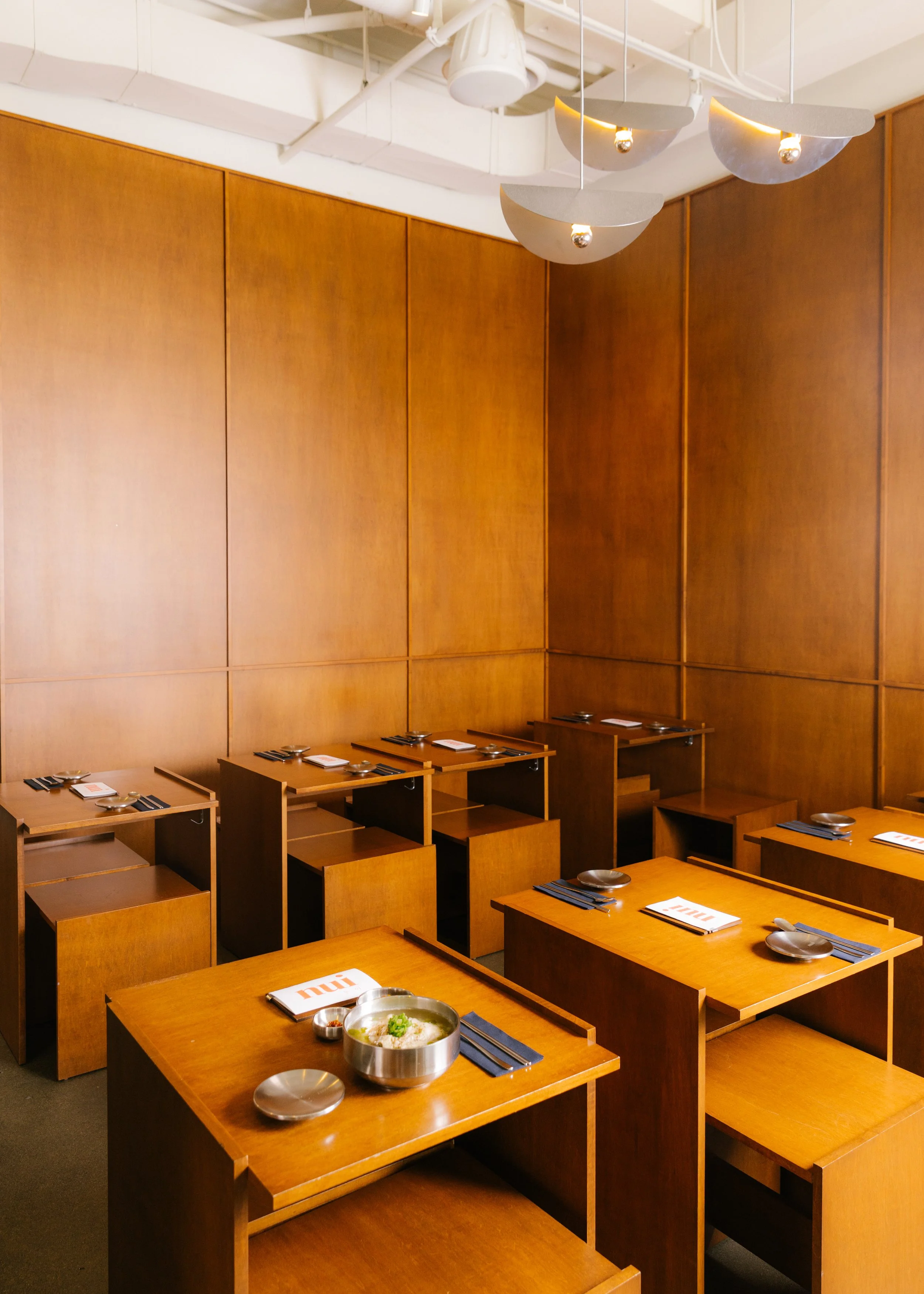
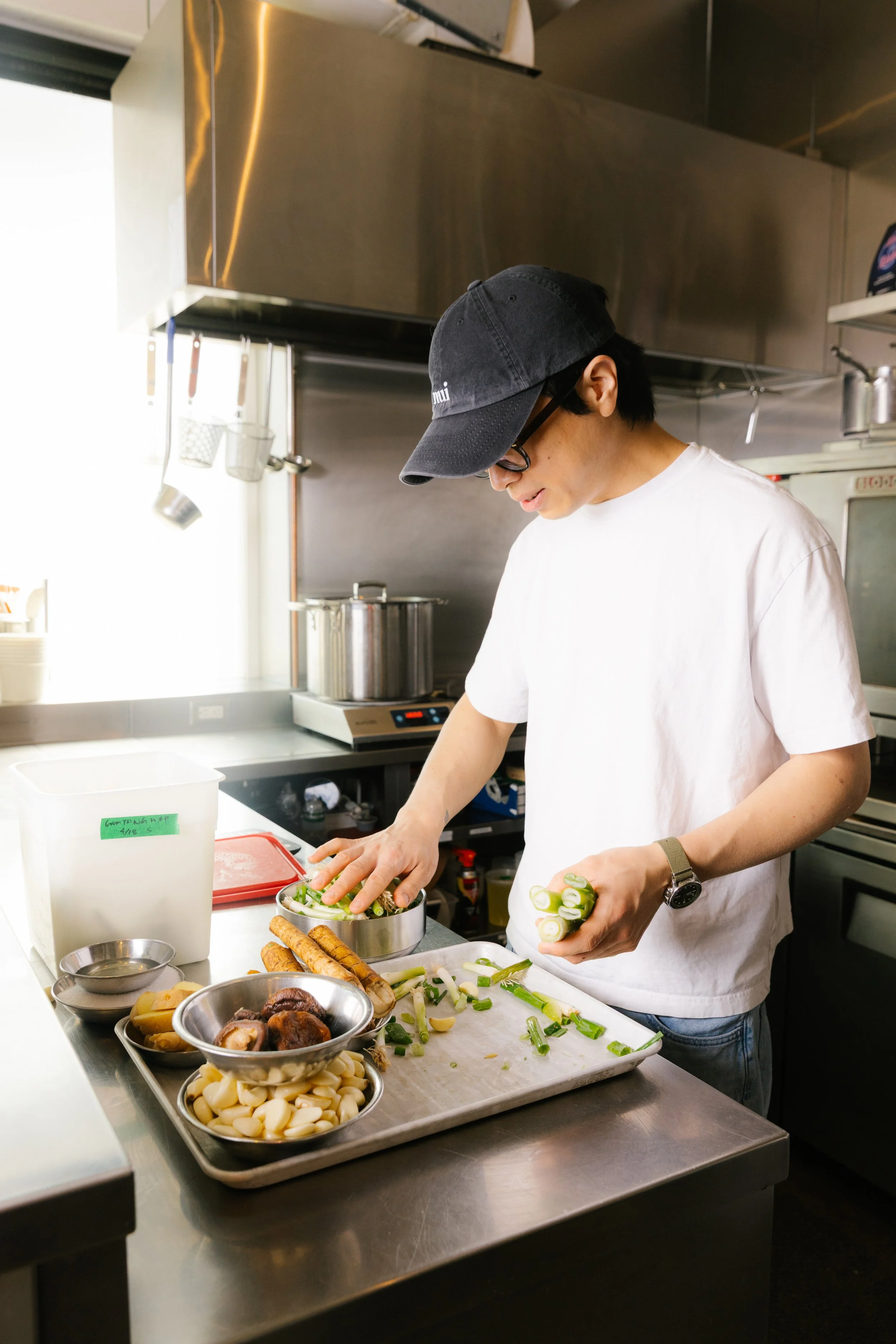
NUI was built almost entirely by family. The interiors were designed by Jay’s wife and sister-in-law, while the tables and much of the space were handcrafted by his brother-in-law, who works in industrial design and cabinetry. The restaurant feels refined and thoughtful, but never intimidating — warm in a way that feels deeply personal.
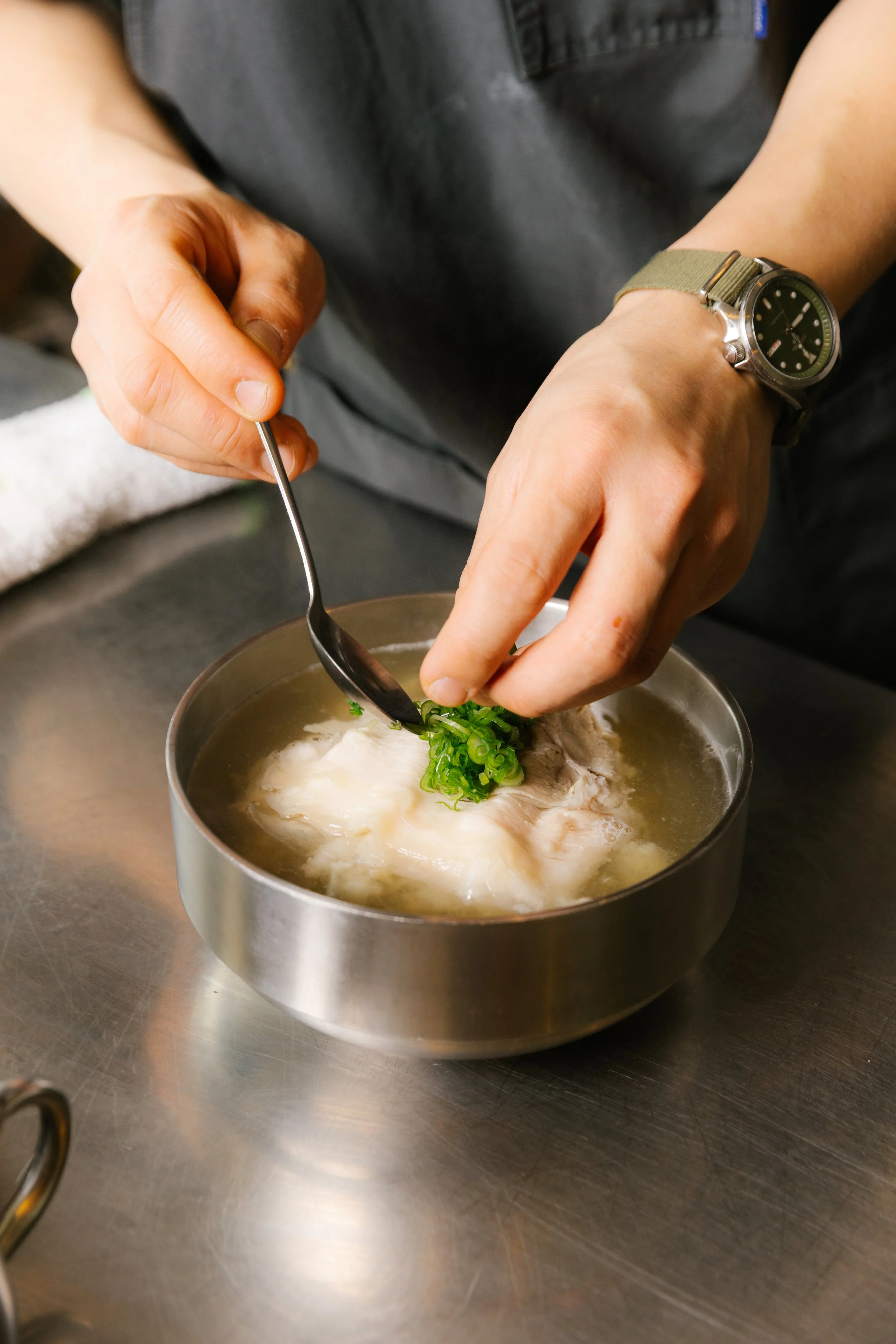
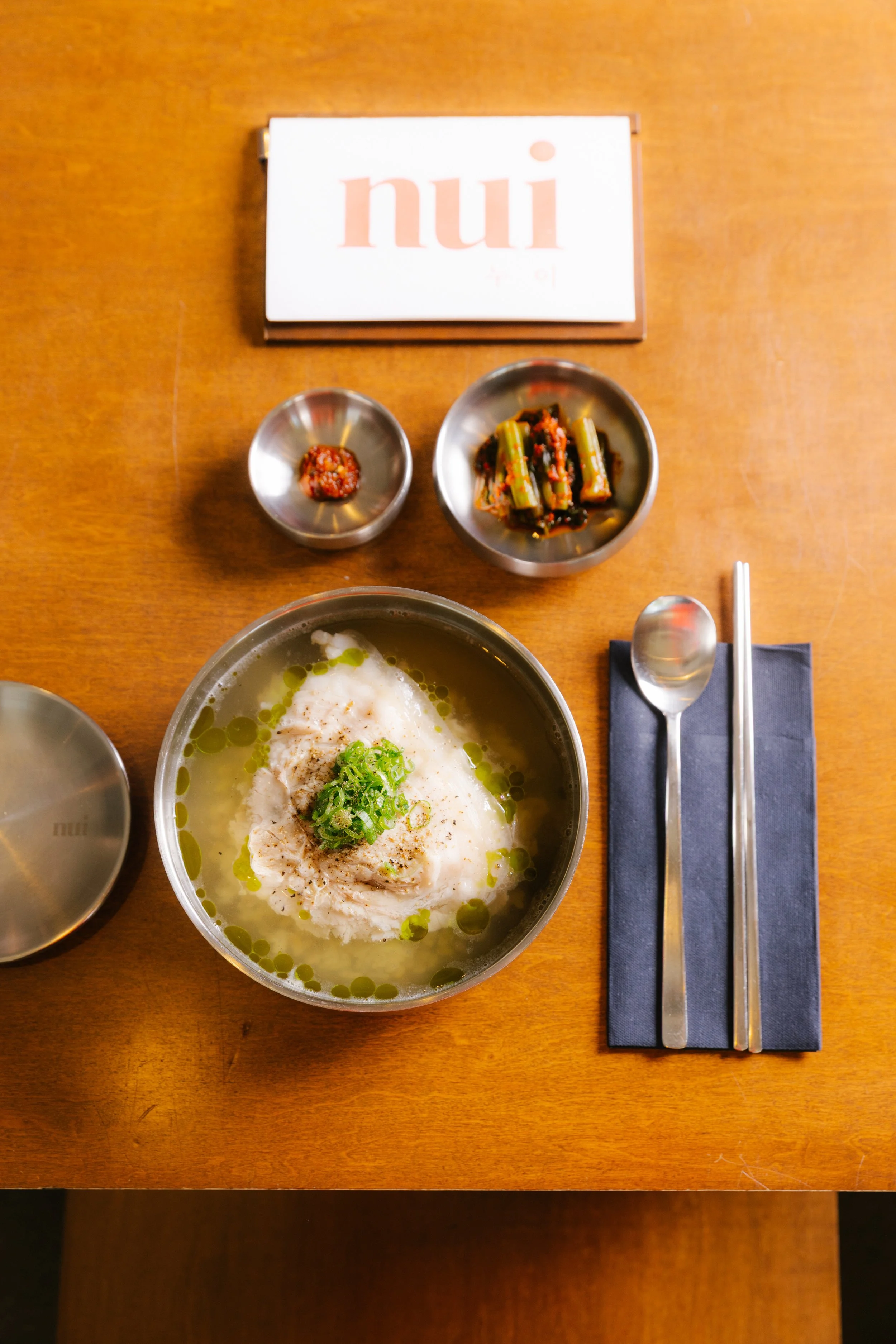
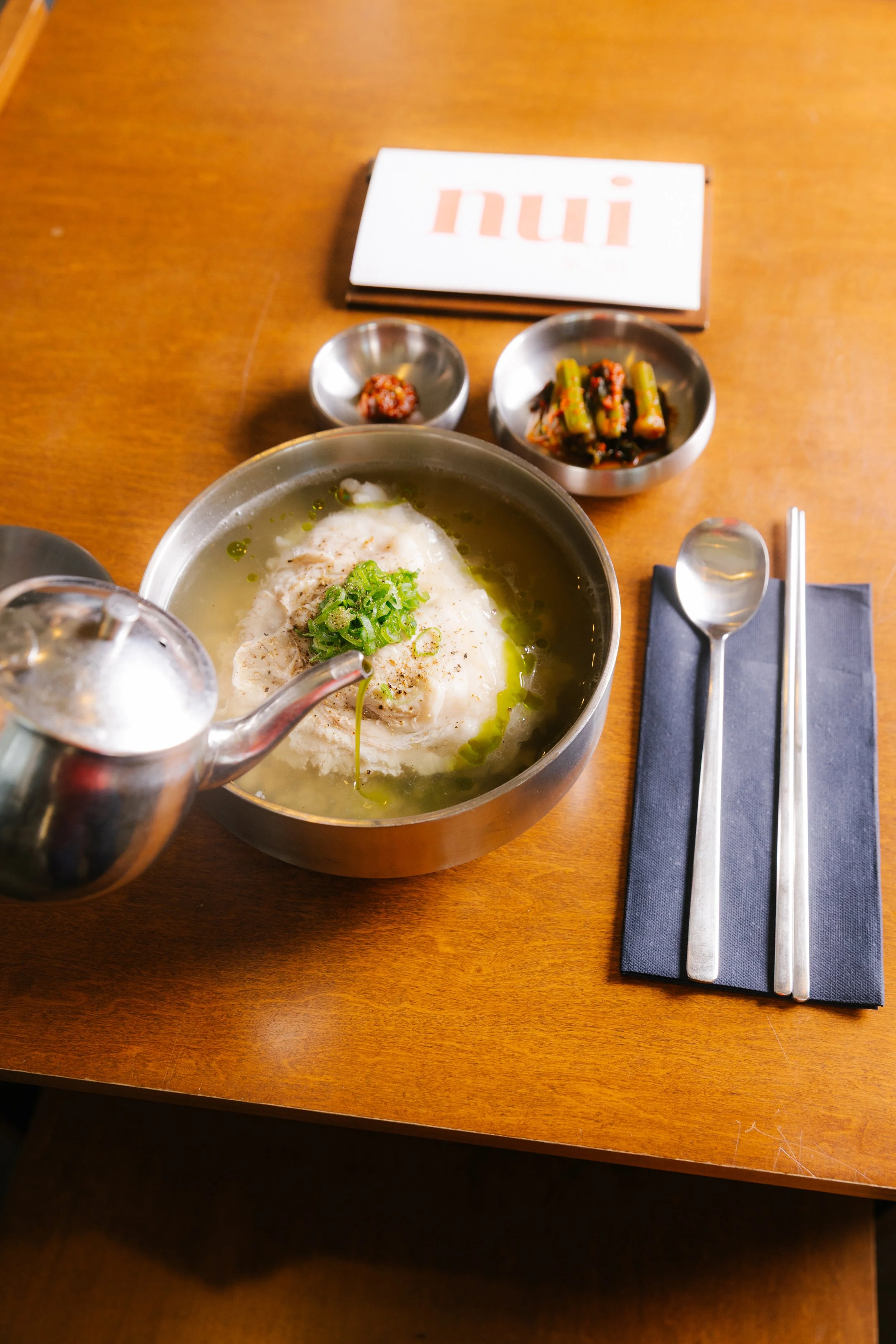
Their signature dish is gomtang: a clear Korean pork soup served with rice. Jay describes it as the “shio ramen” of gukbap (soup and rice) — lighter, cleaner, and more refined than the heavier versions he grew up eating. Comfort food that feels quiet and grounding.

What stayed with me most was hearing how much of Jay’s understanding of Korean food came not from Korea itself, but from family — from his mother and grandmother, both incredible home cooks. Like many immigrant stories, culture gets carried through food, memory, and everyday rituals.

Opening the restaurant has been all-consuming for their family. They spoke honestly about the strain it can put on relationships and time together, but also about the joy of seeing people connect with the food and slowly becoming part of the community around them.
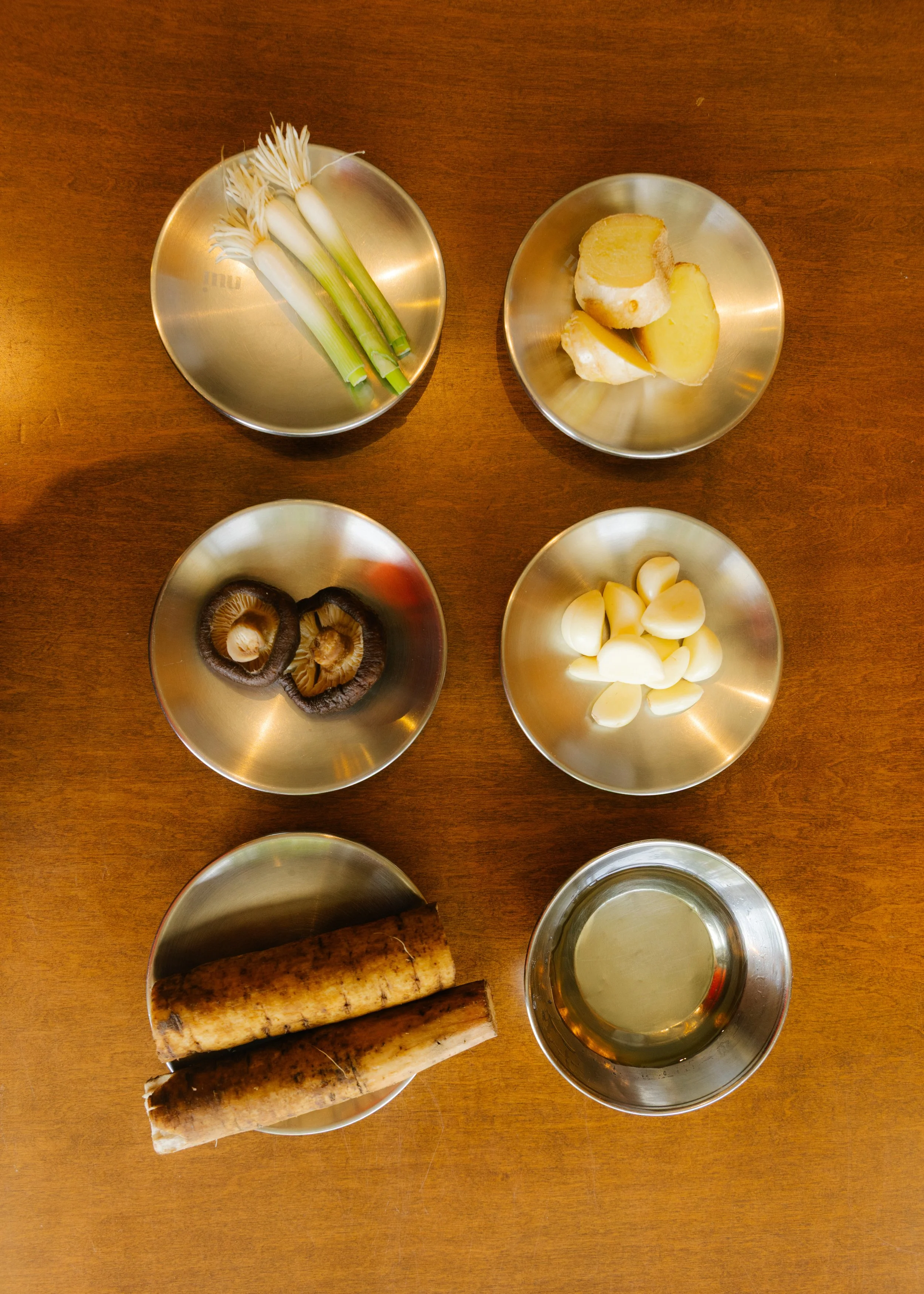
Photographing NUI felt like photographing a family building something together with care, instinct, and long hours behind the scenes. A space shaped as much by relationships as by food.
The Immigrant Table · Luis Almazán of Xinachtli

Vancouver, BC · Mexico City → Canada
Heirloom corn, memory, and the work of keeping tradition alive.

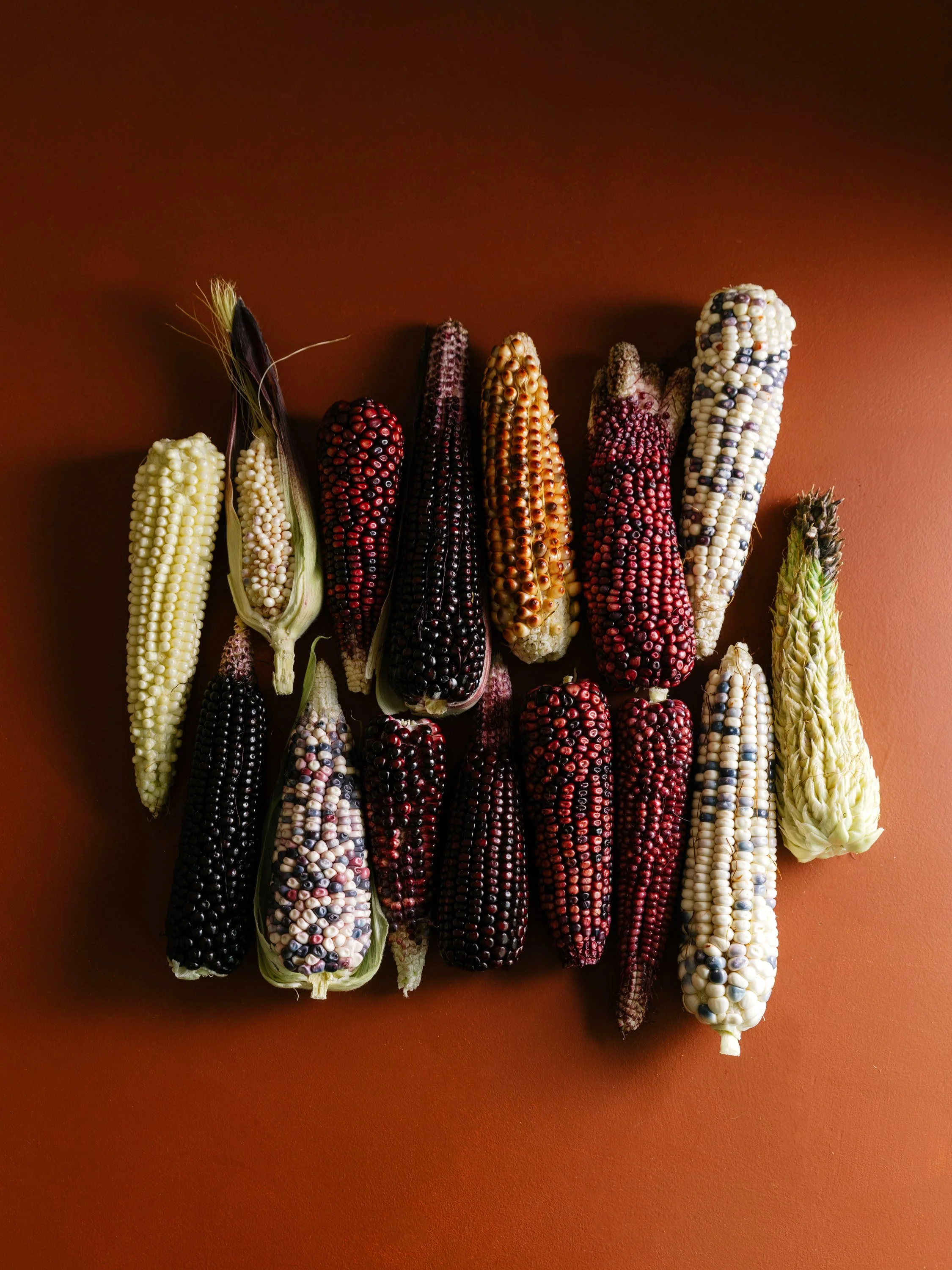
Luis is the founder of Xinachtli, a small-batch tortilla project here in Vancouver. He grew up in Mexico City, surrounded by corn that tasted like something alive — complex, aromatic, grounding. When he moved to Canada, he realized how much he missed it. Not just the flavour, but the feeling of home tied to it.

Most tortillas in North America are made with industrialized corn: hybrid, processed, grown with chemicals. Luis wanted something different — something closer to what he knew. So he began importing heirloom, high-altitude corn from Mexico and making his own tortillas.

Over the past six years, he’s also been growing these traditional varieties at the UBC Farm, on a small plot run by Maya elders. It’s slow work, patient work — work rooted in care.

Photographing him felt like watching someone open a series of tiny treasure boxes. Every husk had its own shape, its own colour. Some soft, some sharp, some almost luminous. There’s something humbling about seeing how much history can live inside a single ear of corn.

Luis’s work sits at the intersection of longing and craftsmanship: when you miss something deeply, you find ways to bring it back into the world. His tortillas — the textures, the smell of warm masa, the quiet rhythm of pressing them — carry that story.

This series, The Immigrant Table, is about exactly that: how food becomes a bridge between where we come from and where we are now. How memory shows up through taste. How something so simple can hold so much.

Luis’s work is one of those rare things that feels both old and new at the same time. I’m grateful to have photographed it — and excited to share the next stories soon.

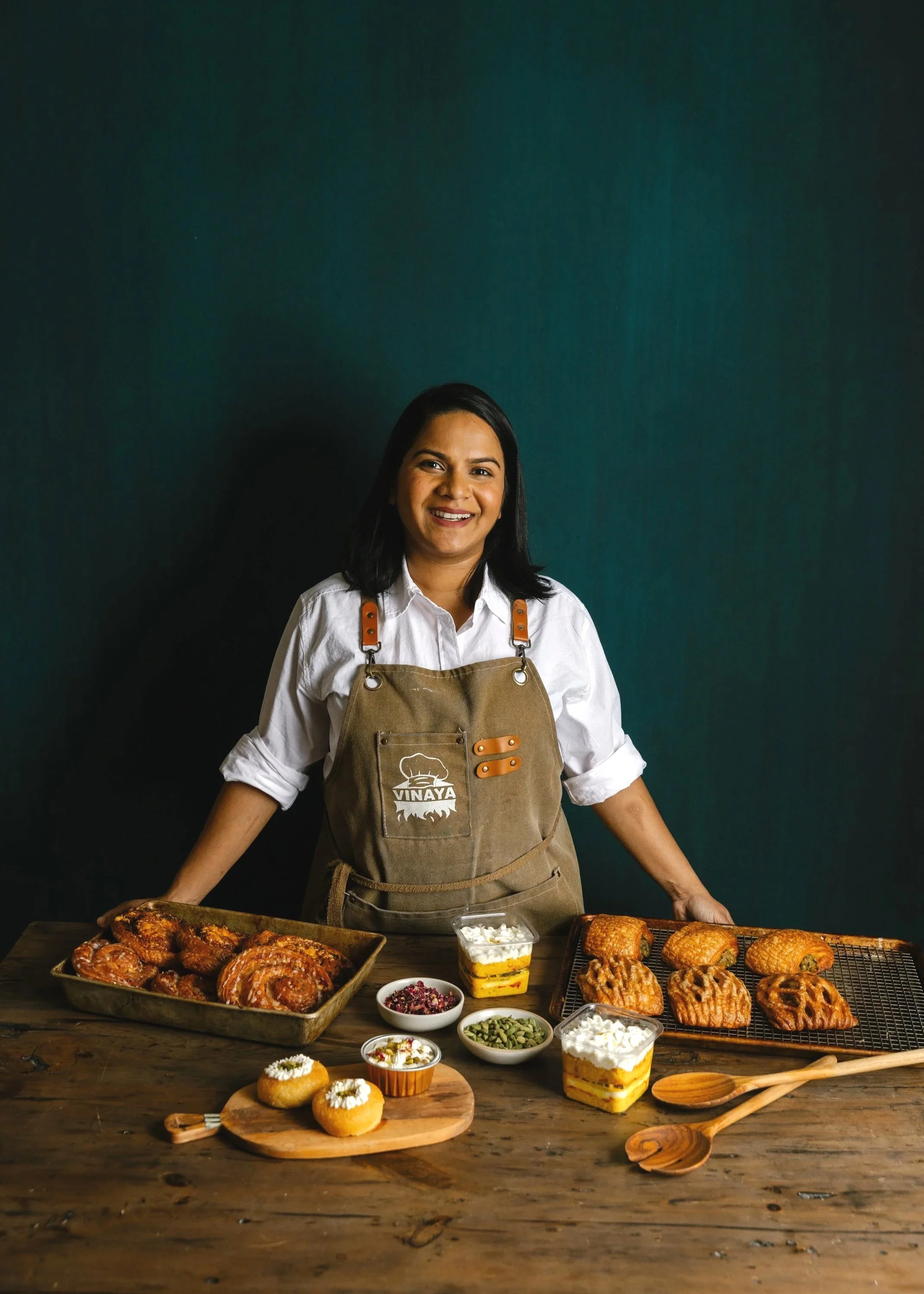
The Immigrant Table · Vinaya of Elaichi Patisserie

Mumbai, India → France → Canada
French pastry shaped by memory, longing, and the flavours of home.

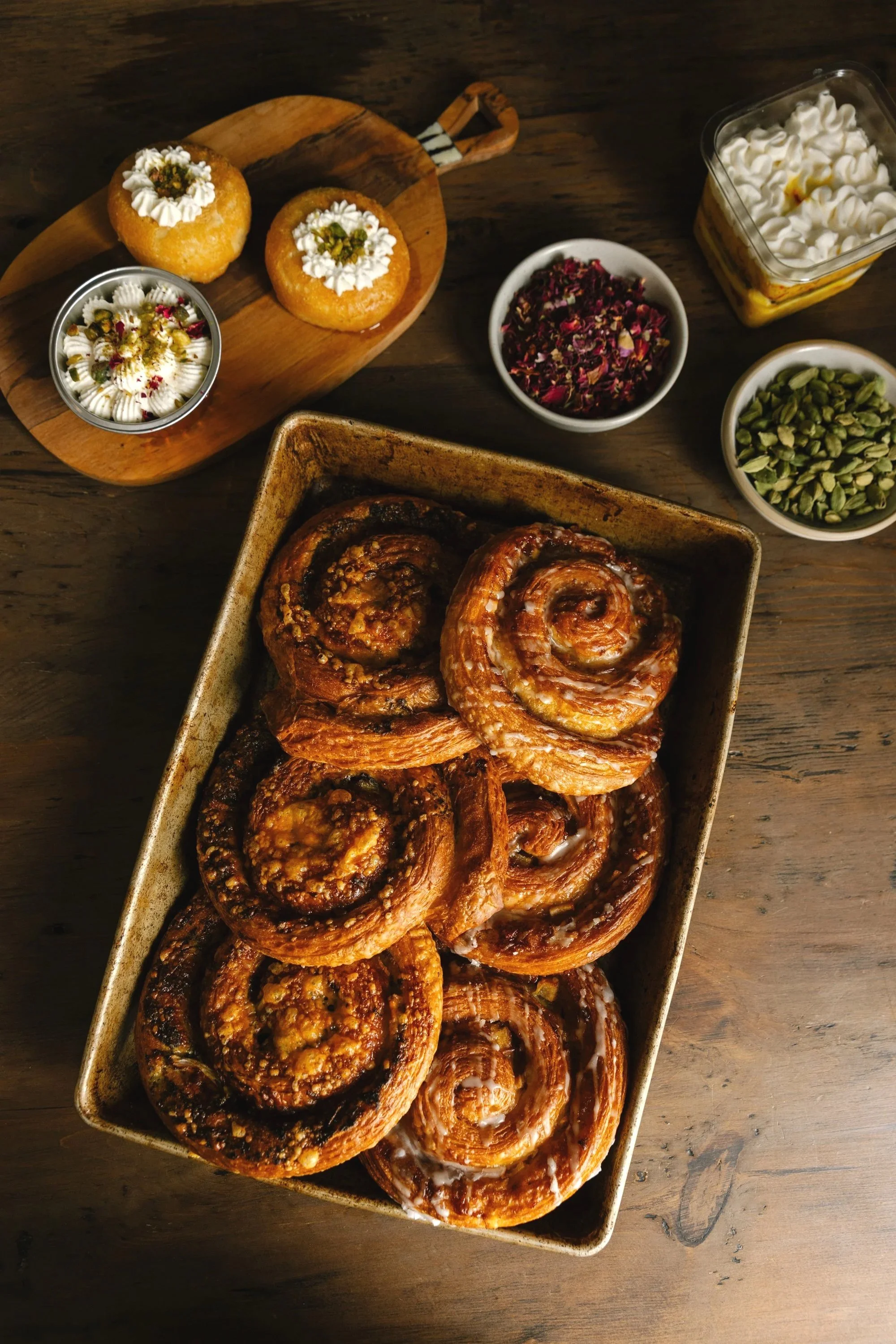
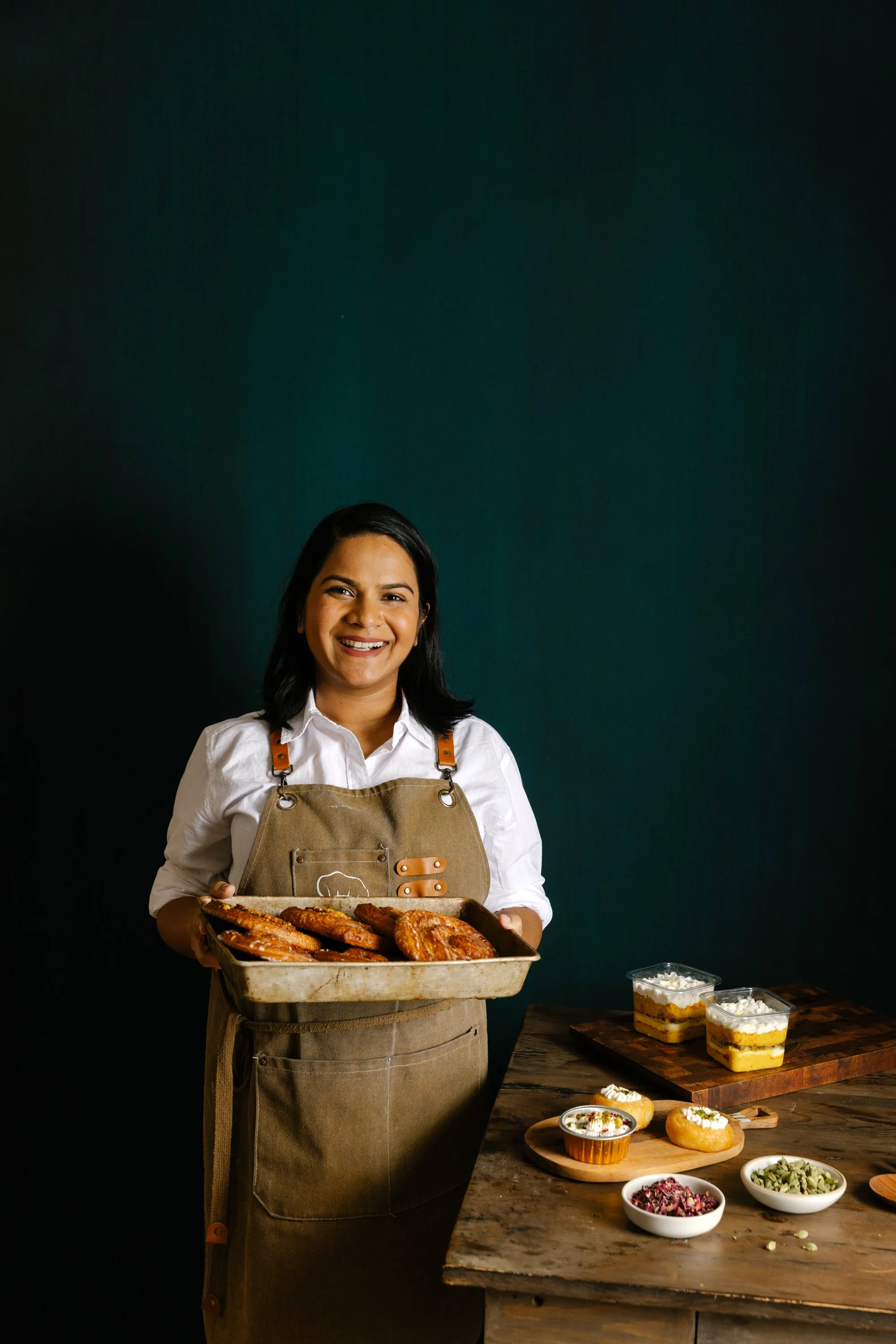
At Elaichi Patisserie, Vinaya folds Indian flavours into French pastry — cardamom, saffron, chai, pistachio. Familiar flavours carried into something new.

“Elaichi” means cardamom in Hindi — a spice she describes as the vanilla of Indian cooking. Tiny, but essential. Present in desserts, curries, chai, and everyday home cooking across India. When she began building the bakery, the name felt natural: a way of connecting the pastries she trained to make in France with the flavours she grew up with in Mumbai.

Before pastry, Vinaya worked in engineering and corporate management in Mumbai. But after years of long commutes and office work, she realized the kitchen was the only place she genuinely felt happy. She began taking pastry classes on weekends before eventually leaving her job entirely and moving to France to study pastry during the pandemic.

Later, she arrived in Canada on PR and eventually found her way to Vancouver, taking whatever opportunities she could find during COVID while trying to break into the pastry industry as a newcomer.

A lot of the bakery’s flavours were born during pregnancy. Stuck at home during COVID, far from India and unable to travel easily, she found herself craving the foods she missed growing up — especially street foods and savoury bakery snacks. So she started recreating them through pastry: masala brioche, samosa croissants, chai-spiced pastries, pistachio saffron cakes.

What stayed with me most was hearing how instinctively food carried her back home. The flavours weren’t created from a business plan first — they came from craving, nostalgia, memory, and the desire to hold onto something familiar while building a life somewhere completely new.

She spoke honestly about how exhausting it has been to build the business while raising a young daughter — early mornings, long market days, balancing childcare and production, figuring things out as immigrants without family nearby most of the year. But this year has also become a turning point: Elaichi has grown enough to hire help and become self-sustaining while she prepares for another baby.

There was something very moving about hearing her talk about that growth — not just as a business milestone, but as relief. The possibility of finally being able to pause for a moment and care for herself and her family while the business continues standing on its own.

Photographing Vinaya fel like witnessing someone slowly build a new version of home through food, memory, and persistence.

The Immigrant Table · Bardia of Delara

Tehran · Iran → Canada
Memory, migration, and Persian food shaped by home and reinvention.

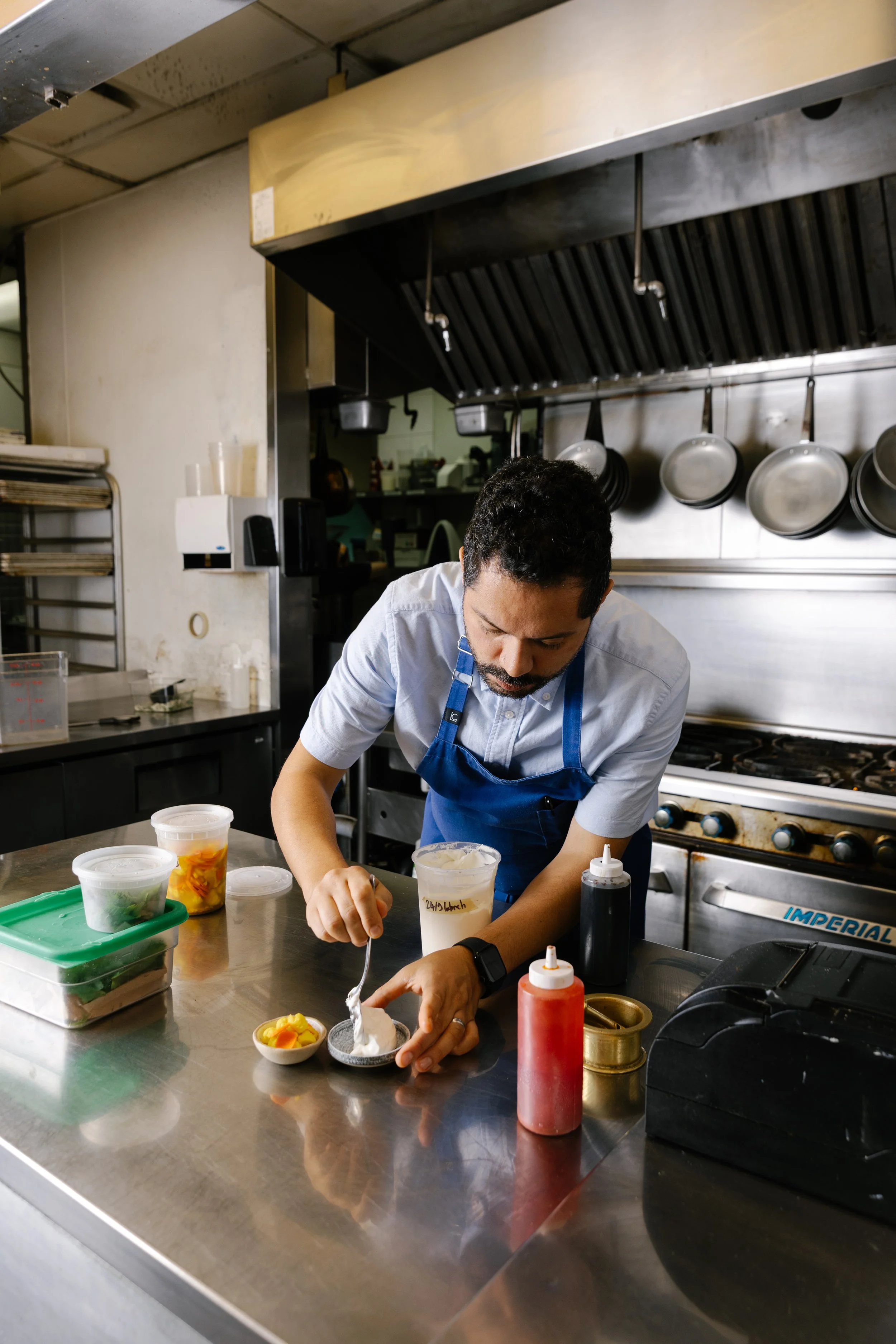
At Delara in Vancouver, chef Bardia prepares a dish from home — something rooted in memory, tradition, and the rhythms of Nowruz, the Persian New Year. It’s a dish tied to his home, to the sound of his mother chopping herbs with a dull knife, and to the scent of steaming rice filling their kitchen in Tehran.

Bardia grew up visiting Tehran’s Tajrish bazaar, where herbs were piled like small green mountains — dusty, fragrant, alive. He remembers washing them in the kitchen with his mother, the scent of fresh herbs lingering on their hands, and the quiet rituals that shaped their meals.

At 19, he left Iran for Canada. What followed was a path that bent and shifted: studying engineering, working at IBM, building a practical life — and then undoing it. Leaving it. Choosing the unknown.

He and his wife moved to France so he could cook, learn, and start again. Food became the thread that held everything together — a bridge between worlds, between past and present, between what he left behind and what he was learning to create.

He recalls holding his new Canadian passport for the first time — feeling both the ache of what he had lost and the weight of everything he had built since. Cooking, for him, has always been tied to this duality: grief and possibility, memory and reinvention.

Delara is part of that story. A space for Middle Eastern cuisine in Vancouver, built from the ground up. A place where cultures meet, where ingredients feel familiar and new at the same time, where the food is an echo of home and a celebration of what’s possible in a new one.

I loved witnessing Bardia in the kitchen — the joy, and the community. And seeing his aunties cooking in the back made the kitchen feel like home in a true sense.

Photography & Words: Sophia Hsin
Restaurant: DeLara, Vancouver
Chef: Bardia Ilbeiggi